

The function that writes your company’s remote work policy had twenty-nine openings in the sample we compiled for this analysis, and was not offering remote for a single one of them.
Human Resources, Administration, and Corporate Education — the people who draft the flexible work guidelines, run the hybrid schedules, and pull the badge data — have a remote inventory of zero. The irony is not lost on anyone working in that function. Flexible work did not filter down the org chart as an equitable benefit. It evacuated the middle and collapsed into two income extremes, and location access is now a fairly precise measure of how hard you are to replace.
The Uncomfortable Conversation Inside People Operations
This interview goes the same way on both sides of the table. A senior recruiter asks about schedule flexibility, pointing at the company’s own careers page. And the hiring manager has to explain why the person selling hybrid work to software engineers is expected in a cubicle five days a week.
“We require the talent acquisition team on-site because the executive committee evaluates HR through presence and engagement. We offer remote to attract specialized technical candidates in constrained markets, but internal HR operations model office attendance to keep policy alignment. Your performance is measured on candidate throughput and in-person team integration.”
That script tells you exactly how leadership categorizes internal coordination. Executives treat human resources, facilities, and team coordination as overhead requiring direct supervision, and when presence is read as control, the team writing the flexibility policy is the last to receive it. It is the same proximity dynamic we mapped in Why the Zoom Ceiling is Stalling Remote Careers, arriving one level higher in the org chart.
This isolates people operations professionals in a specific way. You market an arrangement you cannot access, to candidates who will have it, while your own attendance is tracked. When the department responsible for retention cannot secure flexibility for its own headcount, flexible work stops being an institutional value and becomes a rationed executive concession.
Rare Skills at One End, Monitored Taskwork at the Other
Remote did not disappear. It split, and the two halves have almost nothing in common except the word.
- The top end — scarce talent. Jump Crypto advertised a remote Head of DeFi role in Chicago at $250,000 to $320,000. Rockstar Games listed a Director of Game Development in New York at $220,000 to $275,000 with remote authorization. Disney posted a Cloud Solutions Architect in Los Angeles at $145,000 to $195,000, remote.
- The bottom end — measurable output. US Legal Support advertised a Legal Transcriptionist in Chicago at $42,000 to $56,000, fully remote. Gensler advertised an Architecture Co-op in Philadelphia at $22 to $28 an hour, also remote.
The economics behind those two groups are unrelated. For the DeFi lead or the cloud architect, remote authorization is a retention instrument — you cannot hire that person inside one commuting radius, so the radius goes. For the transcriptionist or the co-op student, remote is a cost measure: the employer sheds square footage and keeps supervision through ticket queues and output counts.
The middle has neither. A regional operations manager is not scarce enough to command the first arrangement, and their work is not countable enough to qualify for the second. That is where most careers live, and it is where the option quietly closed.
What This Looks Like Across One Inventory
A caveat before the table, because the number is small and that is better said plainly than left to assumption. This is 160 listings we compiled, not a census, not a national sample. Fourteen of them are remote. What follows is a description of this inventory today, and it is worth what a snapshot is worth. It is shown because the shape is unusually clean, not because fourteen listings settle anything.
| Functional Category | Active Openings | Remote Listings | Remote Share | Pattern |
|---|---|---|---|---|
| HR, Admin & Education | 29 | 0 | 0.0% | Presence Mandated |
| Engineering & Operations | 25 | 1 | 4.0% | Facility Dependency |
| Marketing & Retail | 28 | 2 | 7.1% | Hybrid On-Site |
| Internships & Early Career | 14 | 1 | 7.1% | Output-Monitored |
| Healthcare & Science | 22 | 3 | 13.6% | Specialized Clinical |
| Technology & Gaming | 26 | 4 | 15.4% | Constrained Talent |
| Finance & Legal | 15 | 3 | 20.0% | High-Value Analysis |
The categories sum to 159 because one listing carried no category assignment. The first row is the one that matters: the largest category in the sample, twenty-nine openings, and not one of them remote. Coordination roles — regional logistics, departmental supervision, people management — are absent from remote inventory entirely, and they are absent from comparable inventories elsewhere, not only here.
The Promotion Mechanism Nobody Designs

The retreat of remote from middle management runs straight into the finding underneath it. Fully remote workers are promoted meaningfully less often than colleagues who come in part of the week, the widely cited figure sits around 31%, from employment-record tracking by Live Data Technologies. But Nicholas Bloom’s randomized trial at Stanford, published in Nature, found hybrid workers promoted at the same rate as their fully in-office peers. No penalty whatsoever.
Read together, those two results say the ceiling is not about working from home. It is about never being in the room. And when leadership sits on-site, the local manager catches the hallway conversation and the unscripted assignment. The remote peer gets the calendar invite.
Proximity bias then runs the performance review. Presence reads as dedication. An on-site manager gets credit for being visible during an operational crisis; a remote peer delivering identical output reads as distant. For a mid-career manager with no technical scarcity underneath her, that perception is the constraint that decides the next five years, not a nuisance.
Why Coordination Went Back to the Building
Executives pull managers back because distributed coordination costs them something they feel directly. Remote alignment needs scheduled meetings, written trails, and asynchronous follow-up. In a building, a bottleneck clears with a conversation on the way to the elevator.
- Friction they experience personally. A senior leader would rather pull three people into a room than wait on a thread. That preference is rarely stated as policy and almost always operates as one.
- Accountability they can see. Executives hold middle managers responsible for team output. Having those managers on-site gives them a proxy for supervision actually happening, a weak proxy, but a comfortable one.
- Norm transmission. Culture moves badly through digital channels. On-site managers are expected to model attendance and behavior for junior staff, which is a job description nobody writes down.
For a specialized engineer, coordination friction is near zero because the work product is self-contained. For an operations supervisor, coordination is the work. We found the same thing from the industrial side in The “Ghost Operator” — those operators run the machines fine and lose the promotion mechanism entirely. Different sector, identical structure.
Ask From Scarcity, Not From Preference
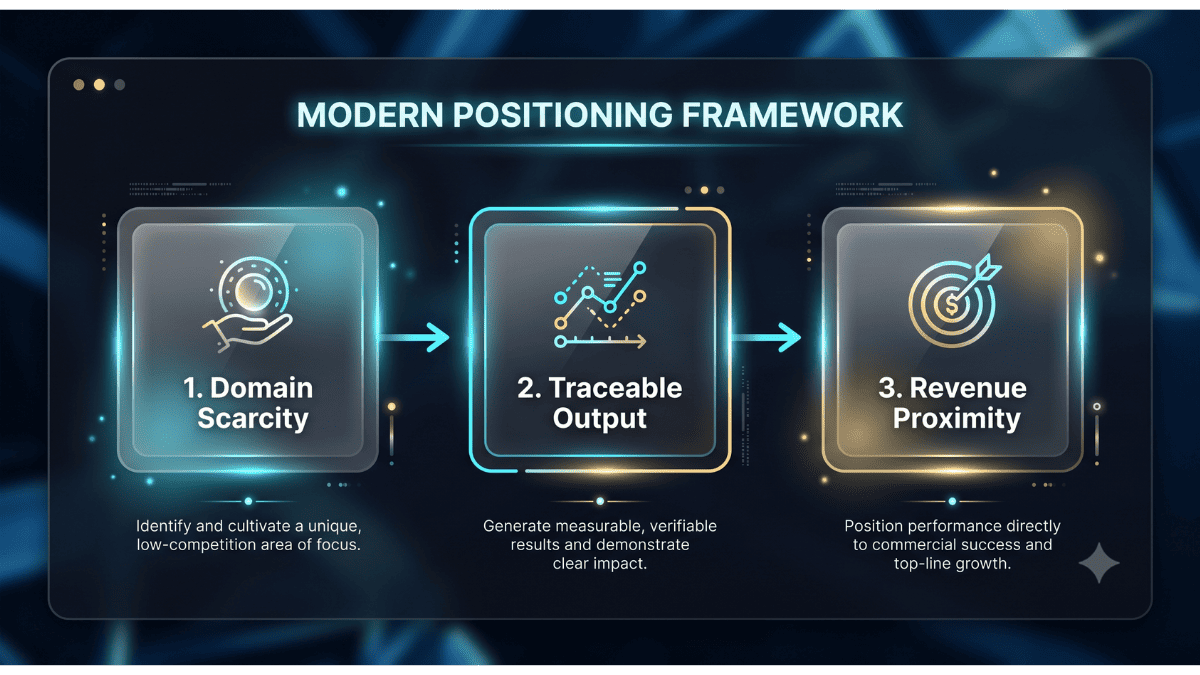
If remote has concentrated at the extremes, then the way most people ask for it is guaranteed to fail. Commute time, work-life balance, and personal preference are all true and none of them are arguments an executive committee prices. They evaluate flexibility through replacement risk. If your role can be filled from the local market next month, asking to leave it signals distance from the team rather than confidence in your output.
Two paths, depending on where you actually sit. If your skill is genuinely scarce, negotiate location as a hiring condition rather than a favor — name it early, before the offer is built, the way you would name a salary floor. Our framework for renegotiating your retainer works here almost unchanged; you are just pricing a term other than cash.
If you are in coordination or middle management, scarcity is not available to you and pretending otherwise wastes the conversation. What is available is converting your work into artifacts an executive can see without walking past your desk. You are not proving you are working. You are removing the perception of coordination risk, which is the thing actually standing between you and the arrangement.
Four artifacts do most of that work, and none of them take more than an hour a week once they exist:
- A decision log your manager can read cold. One line per decision: what was decided, who was consulted, what it cost, what happens next. This is the single most effective document a remote manager can produce, because it answers the unasked question — is anyone actually steering this.
- Escalation records with timestamps. When you unblocked something, when you raised it, how long it took. On-site managers get credit for visible firefighting. Remote managers get credit only for firefighting that left a trace.
- A standing written update on a fixed day. Same format, same day, indefinitely. The consistency does more than the content — it converts you from someone leadership has to check on into a source leadership already has.
- One number you own. Attrition, cycle time, cost per unit, ticket resolution. It does not matter which, as long as it is yours and it moves. A manager attached to a metric is legible from anywhere. A manager described only by responsibilities has to be seen to be believed.
Bring those to the conversation instead of a preference, and you have changed what is being discussed. The ask stops being “I would like to work from home” and becomes “here is how you supervise me without a hallway.” One of those is a favor. The other is a proposal.
Remote was never a gift that generous employers handed down and stingy ones took back. It is a price, and it moves with how hard you are to replace. Every listing in that sample states its location terms, and the HR ladder piece sets out what the function pays. That first row should stop reading zero. Right now it does not.
Pay ranges quoted from advertisements are as advertised by employers in the sample of listings we compiled for this analysis, at the time of writing; those listings are no longer public. Interpretation, comparisons and any figure described as an estimate are our own editorial reading of those sources.
